About RS SEO Solution
RS SEO Solution is an ISO-certified digital marketing company, providing complete SEO, SMO, PPC, website and software design & development services since 2004.

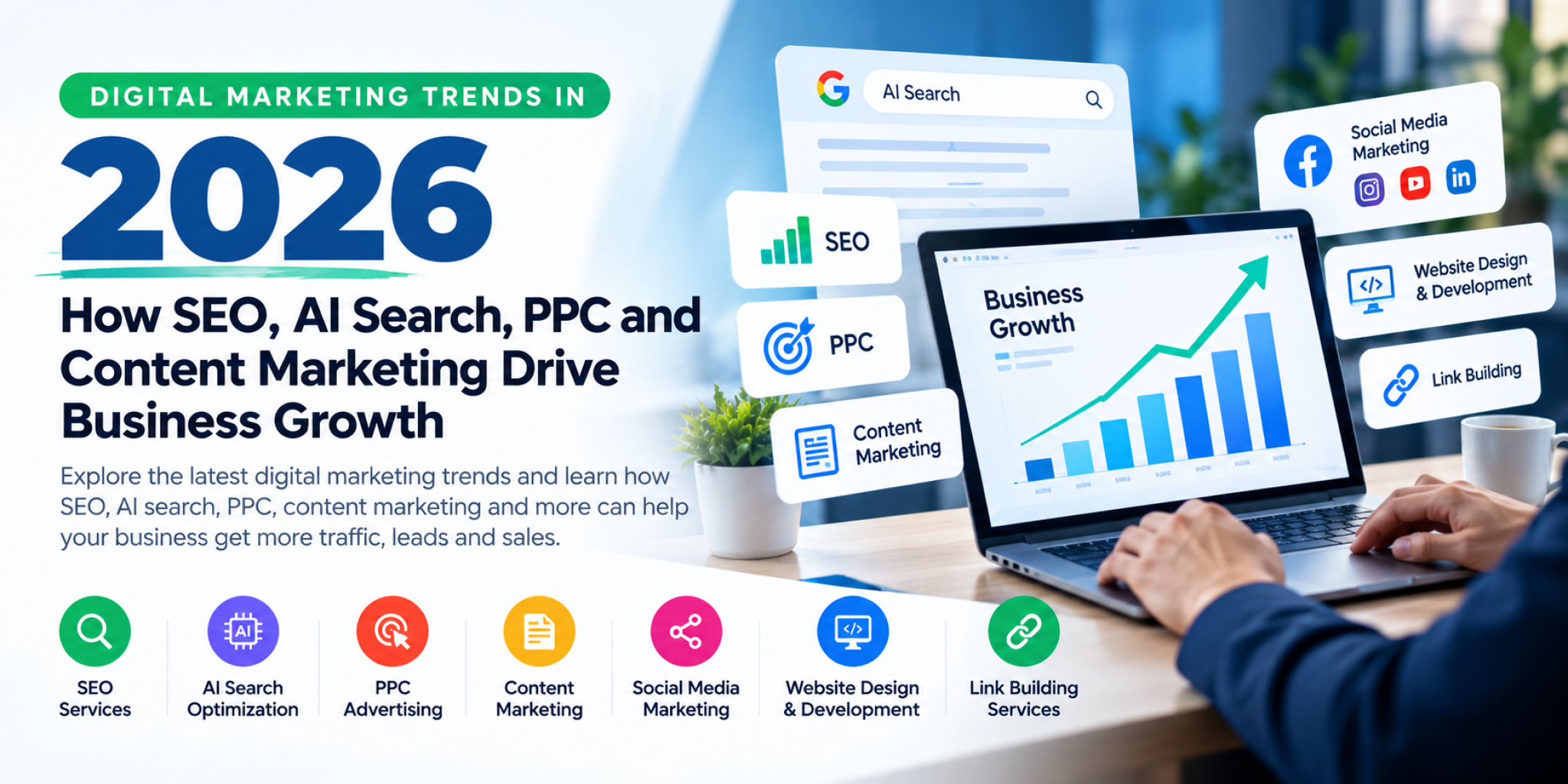
The digital marketing industry is evolving rapidly. Artificial intelligence is changing how people discover information, search engines are presenting answers in new ways, and social media platforms are influencing purchasing decisions. At the same time, businesses continue to compete for better search rankings, qualified website traffic, customer enquiries and profitable sales.
For small businesses, startups, established companies and eCommerce brands, these changes create both opportunities and challenges. A business may have an attractive website but struggle to attract visitors. Another may receive thousands of social media views without generating meaningful enquiries. Some companies invest heavily in paid advertising but fail to convert clicks into customers.
The solution is not simply to spend more money on marketing. It is to build a connected digital marketing strategy that attracts the right audience, establishes trust and encourages customers to take action.
According to HubSpot's 2026 State of Marketing report, marketers are placing growing emphasis on AI-assisted content, automation, adapting SEO to search changes and repurposing content across channels. These developments reinforce the importance of combining established marketing fundamentals with new technologies.
HubSpot Blog
At RS SEO Solution, we believe sustainable online growth requires more than a single marketing activity. Businesses need a strong website, relevant content, technical SEO, credible backlinks, social media engagement and well-managed advertising campaigns.
In this guide, we explore the most important digital marketing trends in 2026 and explain how businesses can use them to improve online visibility, attract potential customers and build a stronger digital presence.
Traditional search engine optimization focuses on helping web pages appear prominently in search results. However, customers increasingly discover information through AI-powered search experiences, including Google's AI features and conversational tools such as ChatGPT, Gemini and Perplexity.
These systems can summarise information, compare options and help users identify relevant businesses. This creates another opportunity for brands: becoming a credible source that search and AI systems can understand, discover and potentially reference.
This approach is often described as Generative Engine Optimization (GEO) or Answer Engine Optimization (AEO).
AI search optimization is not a replacement for traditional SEO. It builds on many of the same foundations, including useful content, accessible web pages, clear site structure, technical quality and credible information about a business.
For example, a company providing website development services should not rely only on a page that repeats the phrase "website development company." It should explain its services, development process, technologies where relevant, project scope, pricing factors and the business problems it solves.
Clear answers help potential customers understand the offering. Well-organised information also makes the content easier for search systems to interpret.
Businesses should focus on publishing original, useful information rather than producing large volumes of repetitive AI-generated pages. They should also ensure that their business details, service descriptions and brand information are consistent across relevant platforms.
RS SEO Solution has already published a GEO Optimization Guide as part of its SEO resources. Businesses looking to improve their foundations can also explore our complete SEO services for search visibility and website optimization.
The important point is that AI visibility cannot be guaranteed through a specific trick or a few additional keywords. It requires a credible online presence supported by useful information, technical accessibility and consistent brand signals.
Despite changes in search technology, SEO remains an important channel for businesses that want to attract customers without relying entirely on paid advertising.
When people search for a product, service or solution, they often have a clear need. Appearing for relevant searches allows a business to connect with potential customers at the moment they are researching their options.
However, effective SEO involves considerably more than inserting keywords into a web page.
Technical SEO helps search engines access, crawl and understand a website. It includes areas such as site architecture, indexability, canonical URLs, mobile usability, page performance and appropriate structured data.
On-page SEO focuses on the content and structure of individual pages. Search intent, descriptive titles, logical headings, helpful internal links and clear explanations all contribute to a better user experience.
Content SEO helps businesses answer the questions customers ask before making a decision. A well-planned blog can introduce a brand to potential customers, while a detailed service page can explain how the business solves a specific problem.
For example, an eCommerce store may need product category optimization, product descriptions, internal linking and technical improvements. A local service provider may benefit more from location-relevant pages, accurate business information and local search optimization.
The correct strategy depends on the website, competition, industry and business objectives.
Before investing in a long-term campaign, businesses should understand what is preventing their websites from performing effectively. Our website audit services can be considered as part of this process.
A structured audit helps identify technical issues, content gaps, internal linking opportunities and other areas that may require attention. These findings can then inform a practical SEO roadmap.
Content marketing remains a valuable way to educate potential customers and demonstrate expertise. Its role is becoming even more important as search results become more competitive and customers compare several providers before making a purchase.
A useful article can attract readers who are researching a problem. A detailed guide can help them compare solutions. A case study can demonstrate how a service works in practice, provided it is based on genuine client experience and verifiable results.
The key is to create content for a defined audience rather than publishing articles simply to increase the number of URLs on a website.
Start by identifying the questions customers ask before buying. For a digital marketing agency, these questions may include how SEO works, when to use PPC advertising, how to improve local rankings, what affects website development costs and how to measure marketing performance.
Each topic should have a clear purpose. Informational articles should educate readers, comparison content should help them evaluate options, and service pages should explain the offering and encourage relevant enquiries.
Content should also be connected through internal links. For example, a blog about improving organic visibility can direct readers to SEO services. An article about building brand authority can link to relevant link building services. A guide to online stores can point readers towards eCommerce website development and eCommerce SEO.
These connections help visitors discover relevant information and help search engines understand how pages relate to each other.
RS SEO Solution offers content marketing services to support businesses that need content as part of their wider marketing strategy.
We also provide article writing and submission services for businesses looking to extend their content distribution activities.
The objective should be to publish material that genuinely helps readers, supports the brand's expertise and contributes to measurable business goals.
Backlinks remain an important consideration in SEO because links can help search engines discover pages and understand relationships between websites. Relevant editorial links can also introduce a brand to new audiences and send referral traffic.
However, not every backlink provides the same value. A large number of low-quality links does not automatically translate into stronger rankings. Excessive link manipulation can create SEO risks, especially when links are acquired primarily to influence search rankings rather than provide genuine value.
Businesses should therefore prioritise relevance, editorial context and the quality of the referring website.
Guest blogging can help businesses contribute useful information to relevant publications while reaching new readers. Contextual links can be valuable when they naturally support the subject being discussed. Digital PR can help brands earn attention through original research, useful resources, announcements and expert commentary.
Industry-relevant resource pages and genuine business directories can also be appropriate when they help users find useful services. The choice of tactic should depend on the industry, target audience and link acquisition objectives.
For companies operating in multiple countries, link building also requires attention to language and regional relevance. A business targeting French-speaking customers, for instance, may benefit more from relevant French-language publications than from unrelated websites in other markets.
RS SEO Solution provides several related services, including:
Link building services for businesses developing their backlink strategy.
Advanced link building services for campaigns focused on backlink quality.
Contextual link building services for contextually relevant link opportunities.
Manual guest blog posting services for outreach-based content placement.
Local citation building services for relevant local business listings.
The right approach is not to acquire links indiscriminately. It is to develop a balanced strategy that supports website authority, referral opportunities and the overall visibility of the business.
Local SEO is especially important for businesses that serve customers in particular cities, neighbourhoods or geographic regions. Hotels, restaurants, clinics, retailers, consultants and home service providers can all benefit from appearing when people search for nearby products or services.
A customer searching for a hotel in Jaipur, for example, may compare map results, reviews, location details, photographs, amenities and booking options before choosing a property.
A business needs to make this information accurate, useful and easy to find.
An effective local SEO strategy begins with accurate business details, an appropriately categorised Google Business Profile, useful photographs, current opening hours and clear service information.
Customer reviews also matter. Businesses should encourage genuine feedback, respond professionally and address concerns honestly. Reviews should never be fabricated or purchased.
On the website, service pages should explain what the business offers and where it operates. Location pages should contain genuinely useful, location-specific information rather than repeating nearly identical content for dozens of cities.
Consistent business information across relevant directories and citations can also help customers identify and contact the correct business.
For example, a hotel could publish useful guides about nearby attractions, transport options, room amenities and local experiences. A local contractor could explain its services, project process and service coverage.
Our local SEO services and local citation building services are relevant options for businesses that want to strengthen their local online presence.
Local visibility should ultimately make it easier for potential customers to discover the business, assess its suitability and take the next step.
Search engine optimization is a long-term investment. Paid advertising, by contrast, can place a business in front of relevant audiences more quickly, subject to campaign approval, competition, budget and targeting.
This makes pay-per-click advertising useful for businesses launching a product, promoting a seasonal offer, testing a new market or generating enquiries while their organic visibility develops.
However, running advertisements is not the same as generating profitable customers.
A campaign can receive clicks and still perform poorly if the targeting is too broad, the offer is unclear or the landing page does not match the advertisement.
Start with the business objective. A campaign intended to generate qualified leads requires different measurement from one designed to increase online purchases or brand awareness.
Keyword selection should reflect the user's intent. Someone searching for a service provider may be closer to making a purchase than someone looking for a general definition. Negative keywords can help reduce irrelevant traffic when used carefully.
Ad copy should communicate the actual offer and set realistic expectations. The landing page should reinforce the message, explain the benefits, address common concerns and provide a clear next step.
Conversion tracking is equally important. Depending on the business, this may include qualified form submissions, purchases, calls or other meaningful actions. Clicks and impressions provide useful context, but they do not prove that a campaign is generating revenue.
Businesses should also evaluate the cost per qualified lead, conversion rate, customer acquisition cost and return on advertising spend where the required data is available.
RS SEO Solution provides Pay-Per-Click (PPC) services for businesses that want paid advertising to become part of a broader acquisition strategy.
The goal is not simply to spend a larger advertising budget. It is to use that budget efficiently, learn from campaign data and improve the quality of the results over time.
Social media platforms give businesses opportunities to build awareness, communicate with customers, demonstrate products and share useful information. However, a large follower count does not necessarily translate into sales.
The value of social media depends on the audience, the content, the platform and the business objective.
For a hospitality brand, engaging photographs, short videos, guest experiences and local travel information may help potential visitors evaluate the property. A B2B company may benefit more from expert commentary, educational posts and professional insights. An eCommerce brand may focus on product demonstrations, customer questions and buying guidance.
Rather than publishing the same message everywhere, adapt content to the platform and audience. Short videos may work well for demonstrations and discovery. Professional insights can support credibility on LinkedIn. Instagram can showcase products, services and visual brand stories.
A practical content calendar should balance promotional posts with educational material, useful tips, genuine customer experiences and answers to frequently asked questions.
Engagement also requires conversation. Businesses should respond to relevant comments and enquiries, maintain a consistent brand voice and direct interested users to appropriate website pages.
RS SEO Solution offers social media marketing services, along with dedicated Instagram marketing services, Facebook marketing services and YouTube marketing services.
These activities can complement SEO and paid advertising by supporting brand recognition, audience engagement and customer research across multiple channels.
A website is often the central destination for digital marketing activity. Search engines may bring visitors to it, advertisements may send potential customers to a landing page, and social media posts may introduce people to its products or services.
If the website is slow, difficult to navigate or unclear about what the business offers, these marketing efforts can become less effective.
A professional website should help visitors understand the business quickly, find the information they need and complete the desired action.
The design should be responsive across mobile phones, tablets and desktop computers. Navigation should be logical, important information should be easy to locate, and forms should request only the details necessary to process an enquiry.
Service pages need clear descriptions, relevant evidence of credibility, answers to common questions and visible contact options. eCommerce websites require additional attention to product information, checkout usability, payment options and customer confidence.
Technical performance matters too. Image optimization, efficient code, suitable hosting and caching can help improve page loading, although actual performance depends on the complete website setup.
Accessibility, security and maintainability should also be considered during development rather than added as an afterthought.
For businesses that need a new website or improvements to an existing one, RS SEO Solution offers website design and development services.
Online stores can explore our eCommerce website design and development services and eCommerce SEO services.
The strongest website is not necessarily the one with the most elaborate design. It is the one that combines an appropriate visual identity, reliable functionality, useful information and a clear customer journey.
Digital marketing provides access to substantial performance data, but collecting data is only the first step. Businesses need to understand which activities contribute to meaningful outcomes.
For example, a blog may attract a large audience but generate few enquiries. Another page may receive less traffic yet produce a higher number of qualified leads. An advertising campaign may achieve a low cost per click but attract visitors who rarely convert.
These situations show why performance should be evaluated against business objectives rather than a single metric.
For organic search, useful indicators include relevant organic clicks, search impressions, keyword visibility, qualified leads and conversions. Paid campaigns can be assessed using cost per conversion, lead quality, customer acquisition cost and return on advertising spend.
For social media, reach and engagement can help measure audience response, while referral traffic and enquiries show whether the activity contributes to business outcomes.
Website analytics can help identify where visitors arrive, which pages they use, and where they leave the conversion journey. Search Console data can provide insight into search queries, impressions, clicks and indexing issues.
Tracking should be implemented carefully, with appropriate attention to consent, privacy requirements and the accuracy of the data being collected.
Businesses should also avoid drawing conclusions from very small samples or short periods of performance. Seasonality, market competition, campaign changes and differences in customer intent can all influence results.
A regular reporting process helps teams identify what is working, investigate underperformance and prioritise the next improvements.
Artificial intelligence can support many marketing tasks, including research, brainstorming, content outlining, data analysis and repetitive workflow automation. These capabilities can help teams work more efficiently.
However, using AI does not automatically make a marketing campaign effective. Generic content, inaccurate information, repetitive pages and poorly targeted campaigns can still underperform regardless of how quickly they are produced.
Businesses should use AI to support the work, not replace the judgement needed to understand their customers and markets.
For content, this means checking facts, adding relevant experience, explaining concepts clearly and ensuring that every page serves a genuine purpose. For SEO, it means evaluating technical issues and search intent rather than relying on automated recommendations without review. For PPC, it means monitoring targeting, budget allocation, conversion data and the quality of leads.
Human oversight is especially important when the subject involves complex products, financial decisions, regulated industries or claims that require verification.
The most effective workflow combines automation where it provides clear value with experienced review, original thinking and a consistent understanding of the brand.
For businesses, the question should not be whether AI is being used. It should be whether the resulting marketing work is accurate, useful, relevant and commercially effective.
The trends discussed above are most useful when they support a connected strategy. SEO, content, link building, social media and PPC should not operate as isolated activities with unrelated objectives.
A business should begin by identifying its target customers, priority services, competitive position and primary growth goals. These might include increasing qualified enquiries, improving online sales, entering new geographic markets or strengthening brand awareness.
Next, assess the current website and marketing performance. Identify technical problems, missing content, weak landing pages, gaps in conversion tracking and opportunities to improve search visibility.
The resulting strategy should prioritise actions according to their potential impact, cost, urgency and available resources.
A practical implementation plan could look like this:
First month: Audit the website, review analytics, define target keywords, check conversion tracking and resolve important technical problems.
Second month: Improve priority service pages, publish helpful content, strengthen internal links and develop a relevant link acquisition plan.
Third month: Refine PPC campaigns, expand social media content, review lead quality and evaluate early performance trends.
This is an illustrative framework, not a guaranteed timetable for rankings or sales. The appropriate schedule depends on the website's condition, competition, resources and business objectives.
Once the foundations are in place, performance data should guide the next round of improvements. Strong pages can be expanded, weak conversion journeys can be refined, and budgets can be adjusted according to evidence.
RS SEO Solution provides complete digital marketing services for businesses that want to coordinate multiple online marketing activities. Our services overview provides an additional starting point for exploring available solutions.
Choosing a digital marketing partner requires more than comparing service prices. Businesses should understand the provider's capabilities, working process, communication standards and approach to measuring results.
RS SEO Solution has been providing digital marketing, SEO, social media marketing, link building and website design and development services since 2004. Our service portfolio covers different areas of online growth, allowing businesses to explore solutions based on their needs rather than selecting disconnected activities without a clear strategy.
Our services include search engine optimization, local SEO, PPC advertising, content marketing, social media marketing, website development, eCommerce SEO and various link building solutions.
We also provide resources that help website owners research digital marketing topics and explore opportunities for content distribution. Businesses can review our work portfolio and client testimonials to learn more about the company.
Every business has different objectives. A new website may need technical SEO and foundational content, while an established business may need to improve lead quality, strengthen authority or expand into new markets. The recommended approach should reflect these differences.
To discuss your requirements, visit RS SEO Solution and share your website, target market and business goals. This provides a starting point for identifying relevant services and planning the next steps.
Important developments include AI-assisted search, continued investment in SEO, useful content marketing, relevant link building, short-form video, paid advertising optimization, better analytics and personalized customer experiences. The right priorities depend on the business model and target audience.
Yes. SEO can help businesses attract relevant organic traffic, improve website discoverability and reach people actively researching products or services. AI-powered search changes how information is presented, but technical accessibility, useful content and credibility remain important foundations.
SEO focuses on improving a website's visibility in organic search results. GEO, or Generative Engine Optimization, focuses on improving the likelihood that a brand's information is understood and referenced in generative AI responses. The two approaches overlap in their emphasis on useful content, technical quality and credibility.
There is no universal budget that works for every business. Investment depends on competition, target locations, campaign objectives, customer acquisition economics and available resources. Businesses should establish measurable goals and evaluate performance before increasing spending.
SEO timelines vary. Technical improvements may be implemented relatively quickly, but meaningful ranking and traffic changes can take months, depending on competition, website history, content quality and the work required. No agency can responsibly guarantee a particular ranking or timeline for every keyword.
Neither channel is universally better. PPC can generate targeted traffic more quickly when campaigns are approved and properly configured, while SEO can build organic visibility over time. Many businesses benefit from combining them according to their budget, goals and customer acquisition strategy.
Relevant backlinks can help search engines discover pages, provide referral traffic and contribute to a website's authority signals. Quality and context matter more than simply accumulating large numbers of links. Manipulative link schemes can create risks.
Yes, in suitable markets. Small businesses can focus on specific customer needs, relevant local searches, specialist topics, helpful content and strong service pages. Success depends on the competitive landscape and the quality and consistency of execution.
Start with accessible, technically sound pages and clear, accurate business information. Publish useful content that directly answers customer questions, demonstrate relevant expertise, maintain consistent brand details and earn legitimate recognition from relevant sources. AI citations and recommendations cannot be guaranteed.
RS SEO Solution offers SEO, PPC, local SEO, content marketing, social media marketing, link building and website design and development services. The appropriate combination depends on your current website, audience, competition and business objectives. You can explore our digital marketing services or contact our team to discuss your requirements.
Digital marketing in 2026 is not about following every new platform or adopting every emerging technology. It is about understanding how customers discover businesses, what information they need before making a decision, and how to turn that attention into measurable business outcomes.
SEO supports discoverability. AI search optimization extends the focus to emerging search experiences. Content marketing helps answer customer questions. Link building can strengthen relevant authority signals. PPC can bring targeted visitors to a suitable offer, while social media supports awareness and engagement. A well-designed website connects these activities and helps visitors become customers.
Businesses that coordinate these channels, measure meaningful outcomes and improve their strategies consistently can make better use of their marketing resources.
If you want to strengthen your website visibility, attract relevant visitors and build a more effective online presence, explore the digital marketing solutions offered by RS SEO Solution. With services covering SEO, paid advertising, content, social media, link building and web development, we can help you identify the areas that best fit your business goals.
Start with a clear strategy, focus on your customers and build your digital presence for sustainable growth.






Leave a comment
All fields marked with an asterisk (*) are required